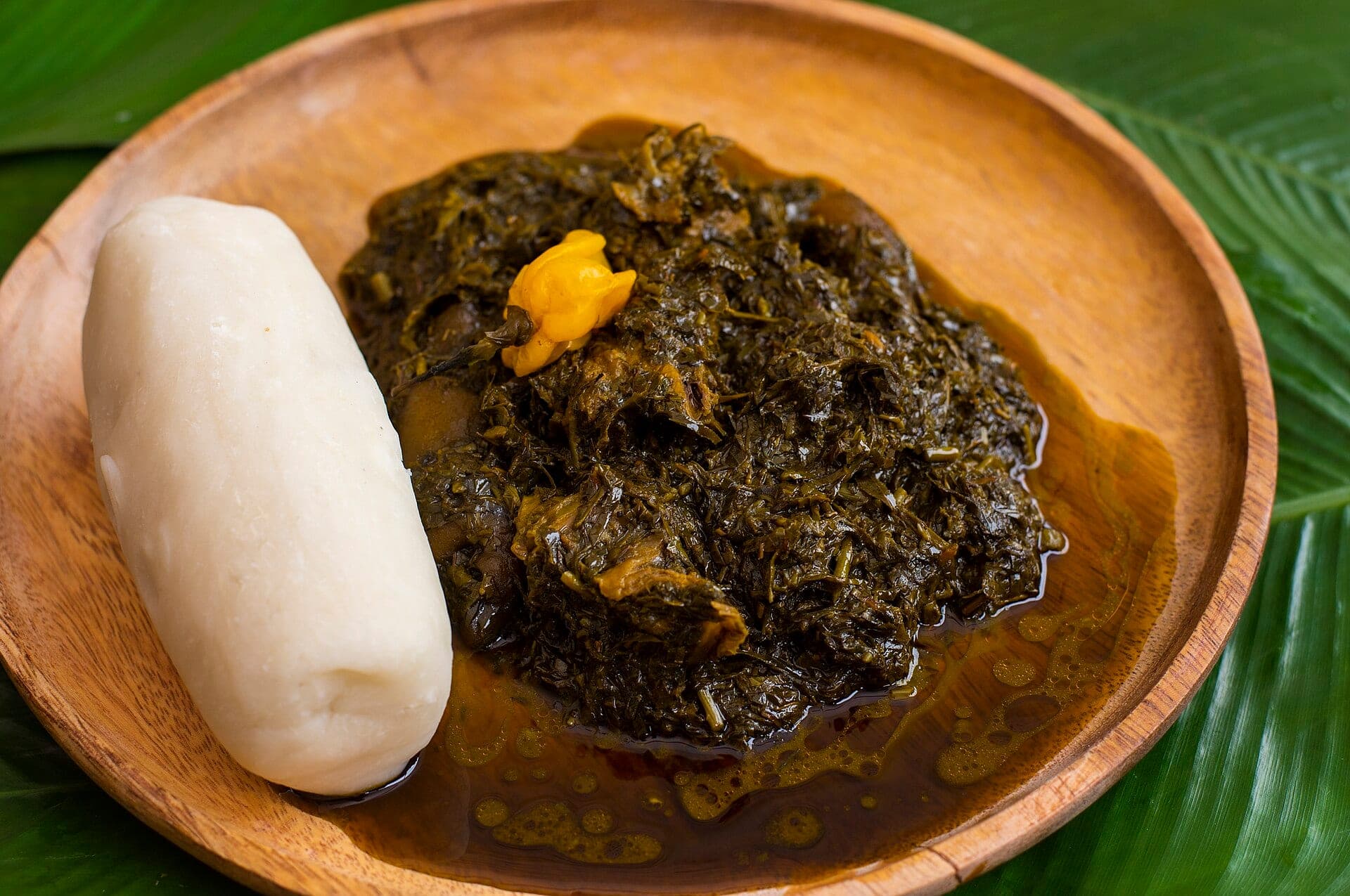
Eru: the leaf the Bayangi gave to Cameroon
A forest vine, a knife, hours of patience: behind one of the country’s best-loved dishes stands a people, the Bayangi of Manyu. And a question: if the leaf were not cut, would it still be eru?
By Yuhala Darren Tuma11 October 20264 min read
Some dishes feed you, and others bring someone home. Eru is one of those. That green so deep it is almost black, the red oil shining at the edge of the plate, the white ball of water fufu beside it: for many of us, it is a Sunday, a mother, a voice calling everyone to the table.
Behind this dish the whole country has made its own, there is a forest vine, a knife, and a people: the Bayangi.
A leaf born in the forest
Eru is first of all a plant: Gnetum africanum, a vine that climbs the trees of the rainforest. Its leaves are thick, smooth, almost like leather. In the Centre and the South, the same leaf is called okok; across the border, in Nigeria, it is afang or okazi. One leaf, several peoples, several ways of loving it.
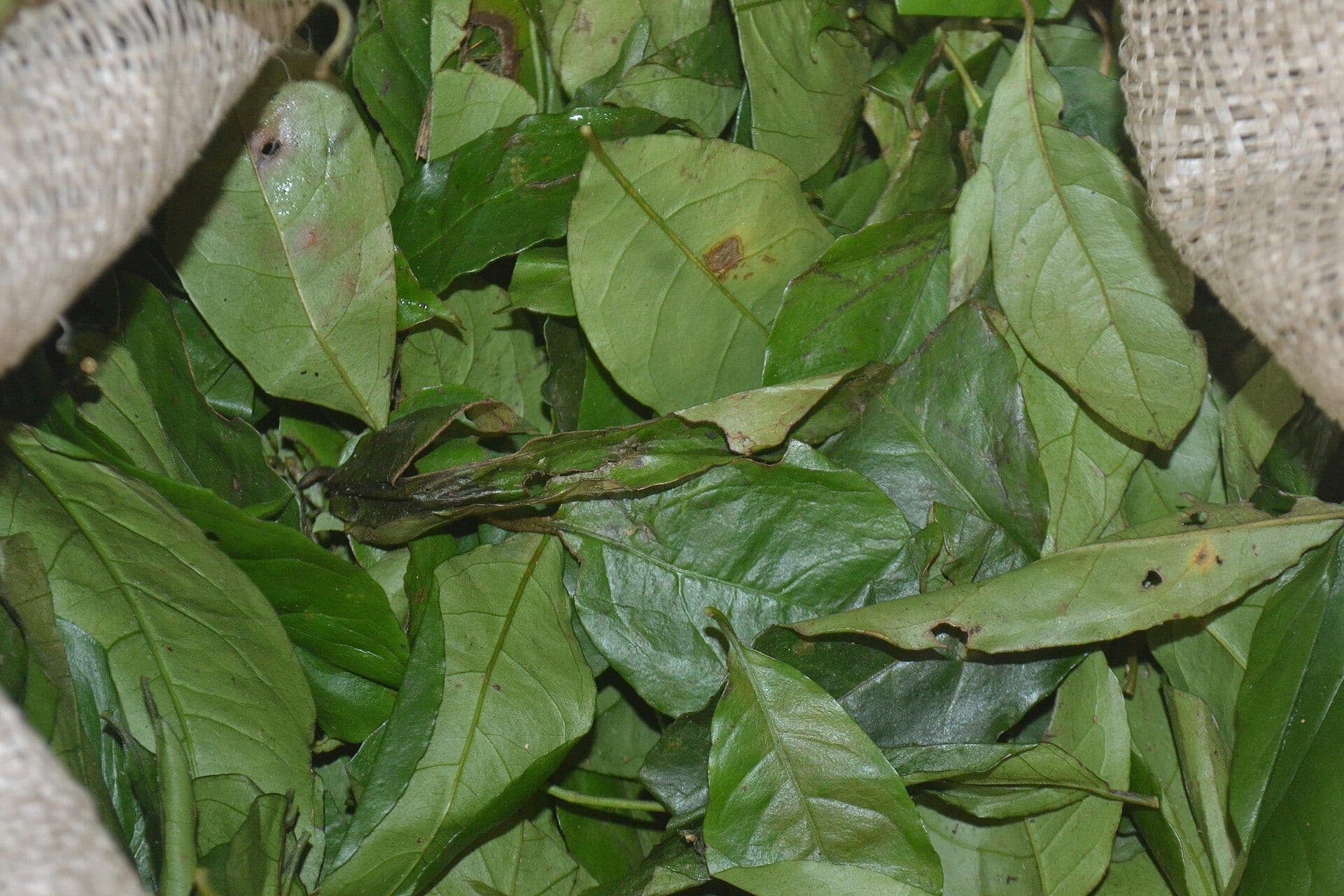
The Bayangi, keepers of the recipe
The dish we call eru comes from the Bayangi people, in the Manyu division, around Mamfe, in the South-West. It is forest country: the leaf has been gathered there for generations, and that is where the way of preparing it was settled.
The recipe takes few things: the eru leaf sliced very fine, the waterleaf that softens it, red palm oil, dried crayfish, smoked fish, meat and cow skin, the kanda. Nothing complicated. It is all in the time you give it, and in the hand of whoever stirs the pot.
Then the dish did what well-loved dishes do: it followed people. Today it is at home in Buea, in Douala, in Yaoundé, and all the way into the kitchens of the diaspora. But every plate still carries a little of Manyu.
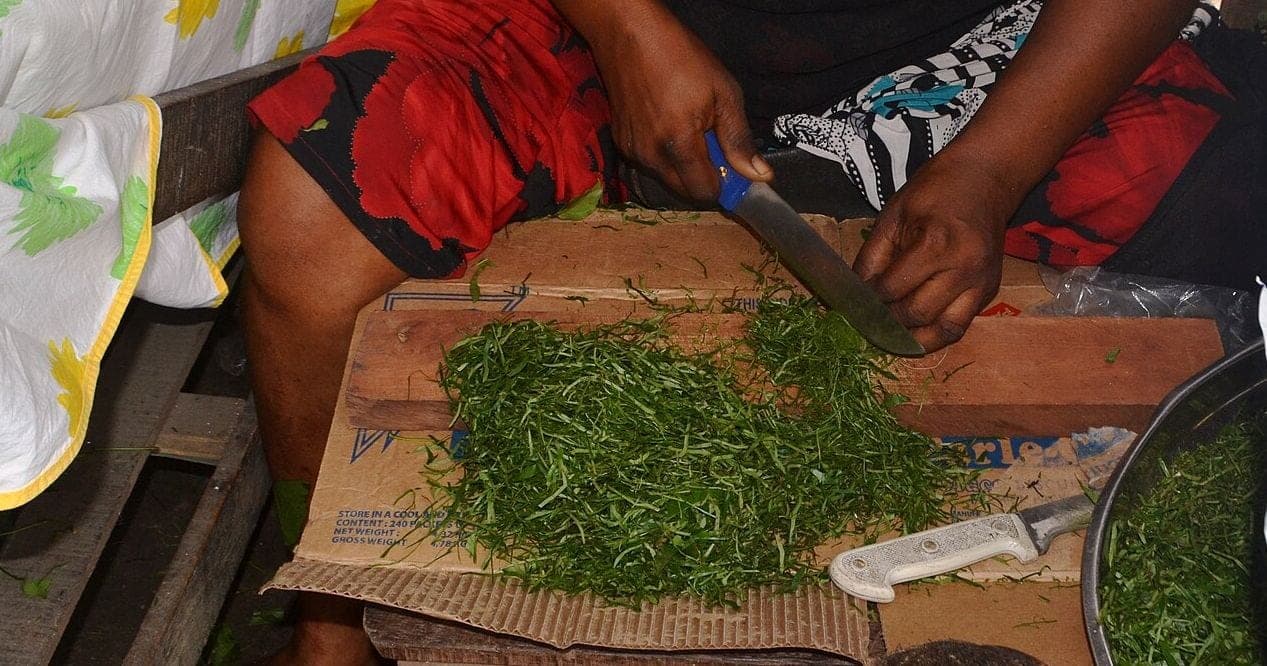
What if the leaves were not cut?
It is a child’s question, and children’s questions are often the best ones. The eru leaf is nothing like spinach: it is firm, fibrous, and it does not melt as it cooks. Left whole, it would stay a tough leaf in the oil, one you would have to chew for a long time.
So the knife is part of the recipe. It is because the leaf is cut into very fine threads that it cooks, that it blends with the waterleaf, that it holds the oil and the taste of the crayfish. Without that cut, we would still have the plant. We would probably no longer have the dish.
Eru is not only a leaf. It is a leaf, plus somebody’s patience.
At the market, women spend their days slicing it by hand, leaf after leaf. The dish begins there, long before the pot.
How it is eaten
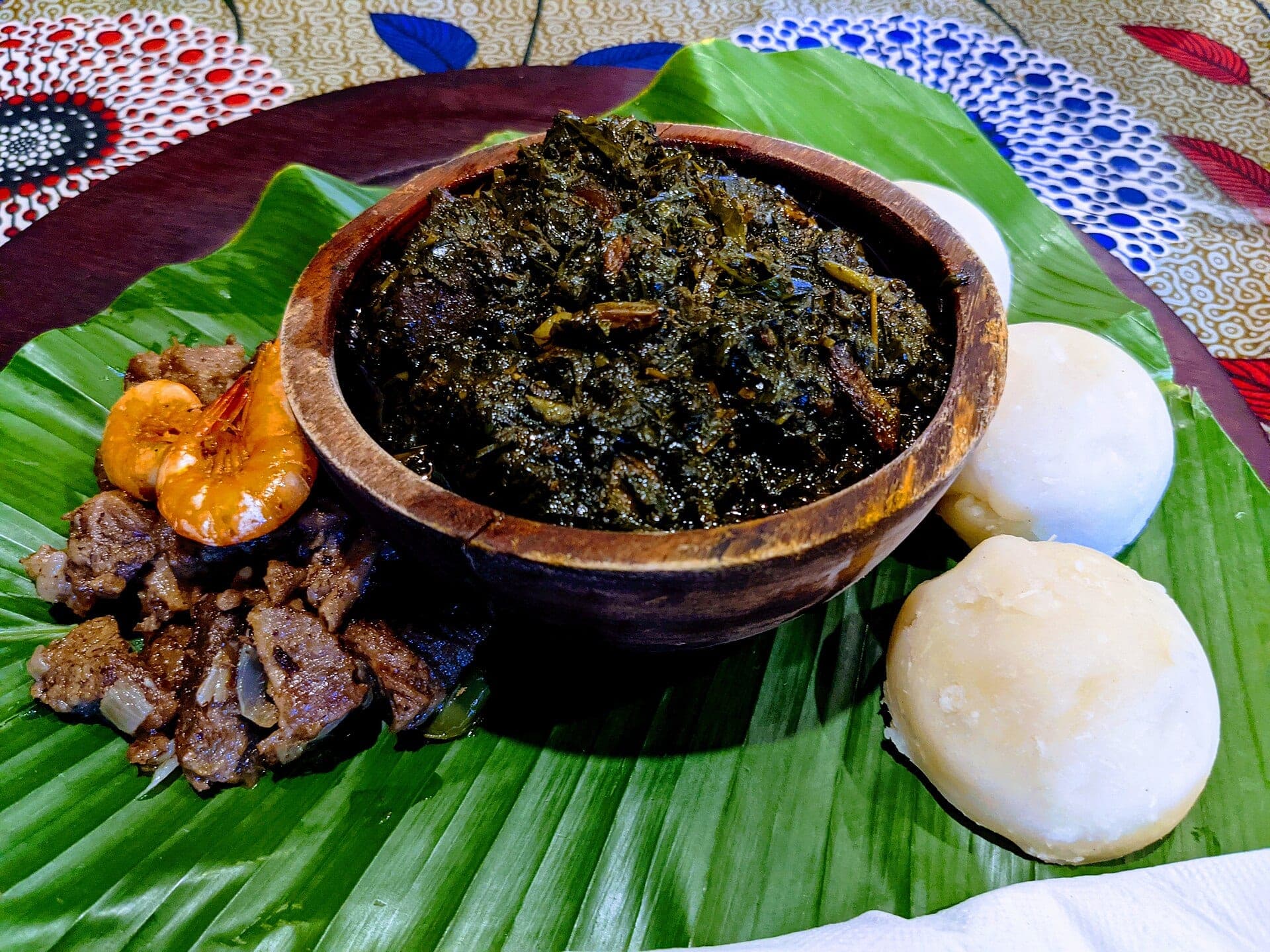
With water fufu, a soft white paste of fermented cassava, or with garri. You pull off a piece with your fingers, dip it, and gather the eru with it. Cutlery exists. It is not compulsory.
Where to eat it?
In restaurants that cook local food, in every big city. NiceThings groups them for Yaoundé, Douala and Buea. And if you know a place where the eru is worth the trip, add it: that is how the map grows.
And you, your eru?
Your mother’s, the one from a restaurant you always go back to, the one you learned to make far from home: tell us about it, just below.
A vine, a knife, a people. Three simple things, and one of the best-loved dishes in the country.
Photos: Charly Neros (opening photo), Minette Lontsie.jpg) (leaves, and slicing, cropped) and Étienne Talla, under CC BY-SA 4.0. Via Wikimedia Commons.
Share
Over to you
And you, what do you think?
An opinion, a memory, a good address: be the first to react.